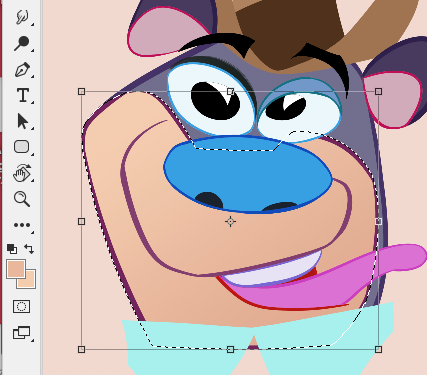
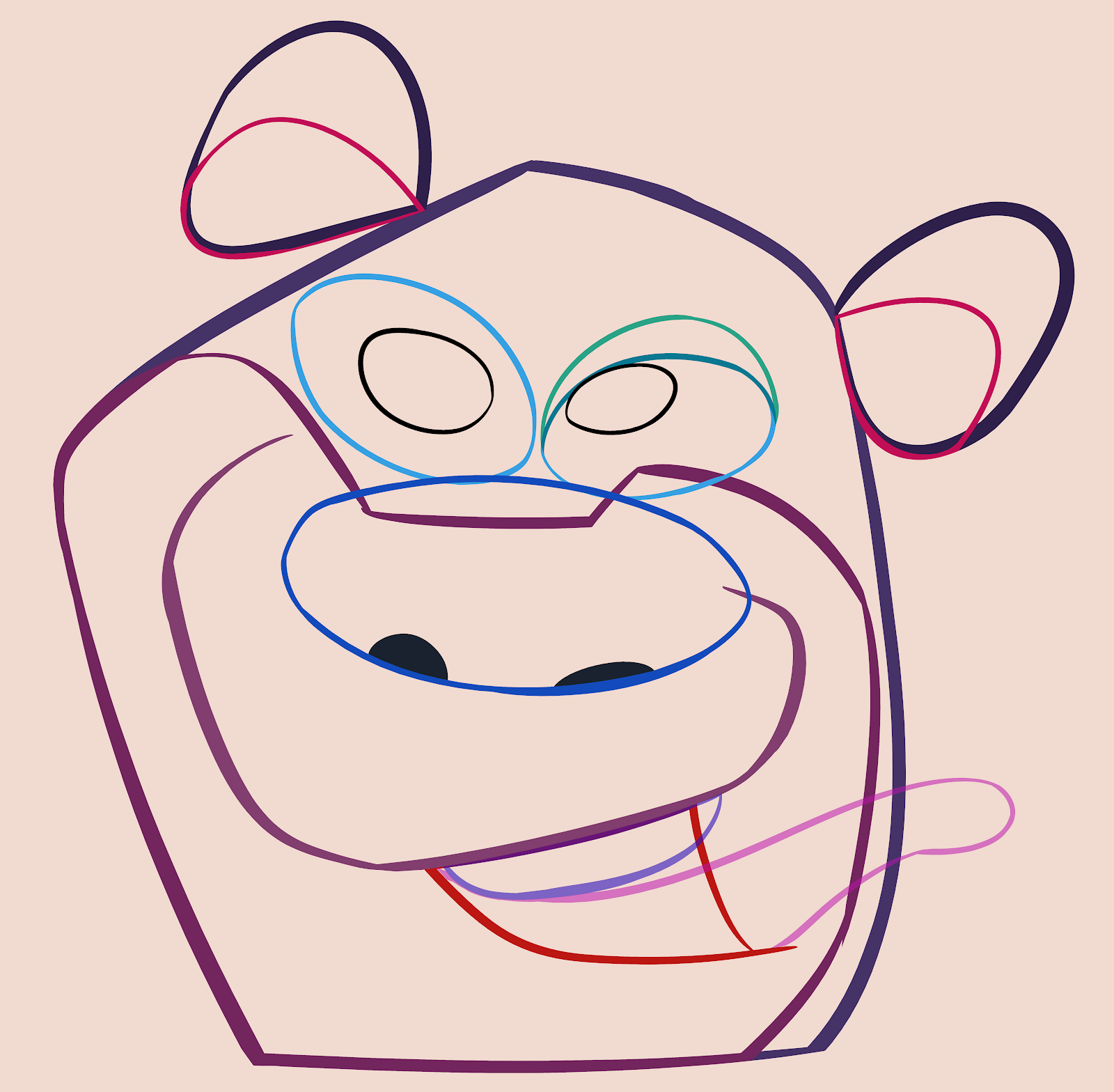
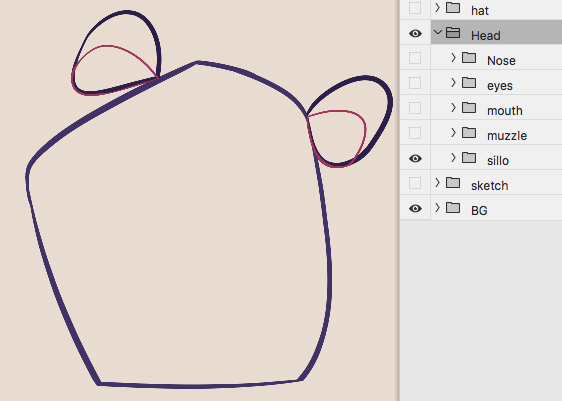
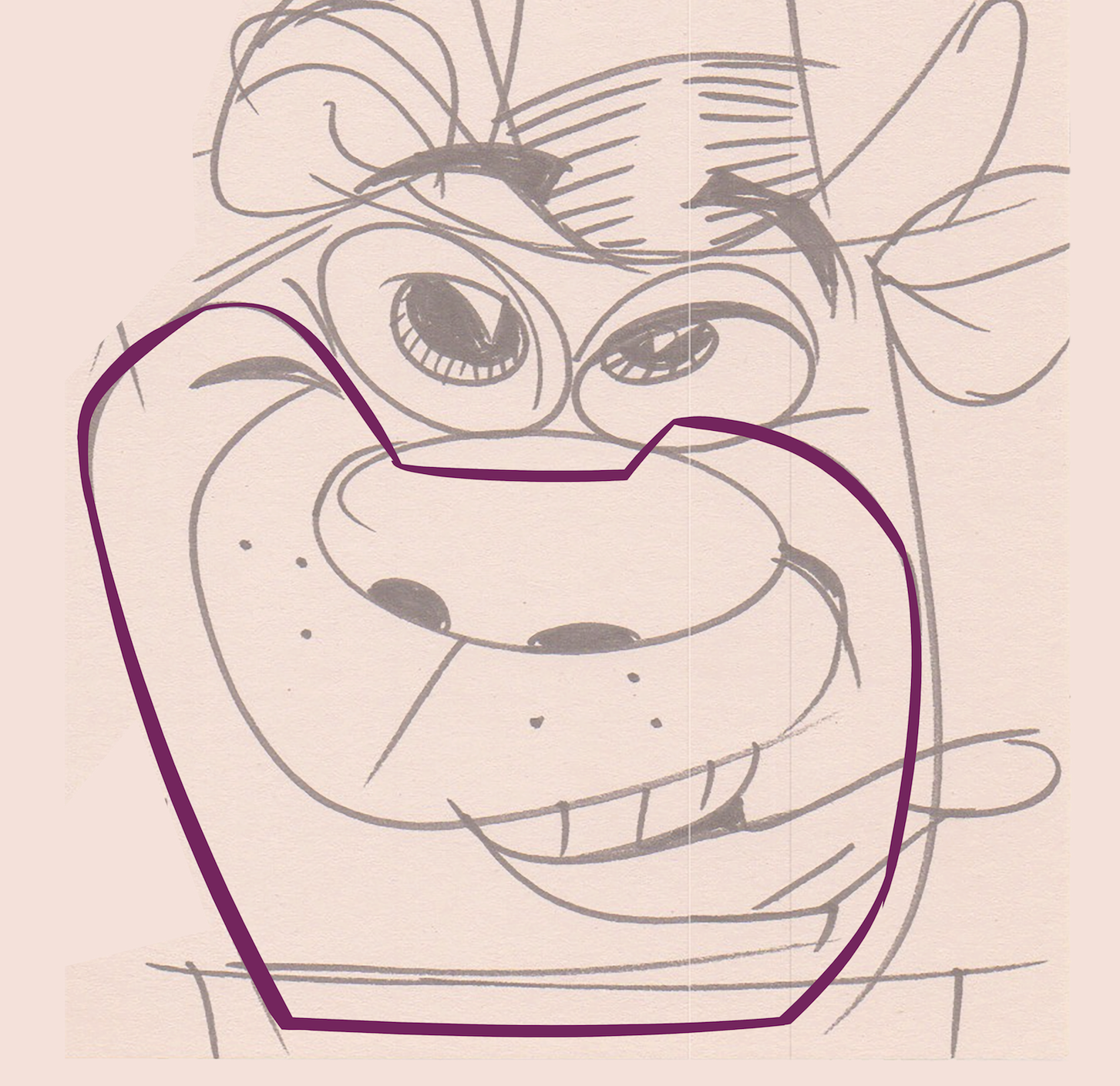
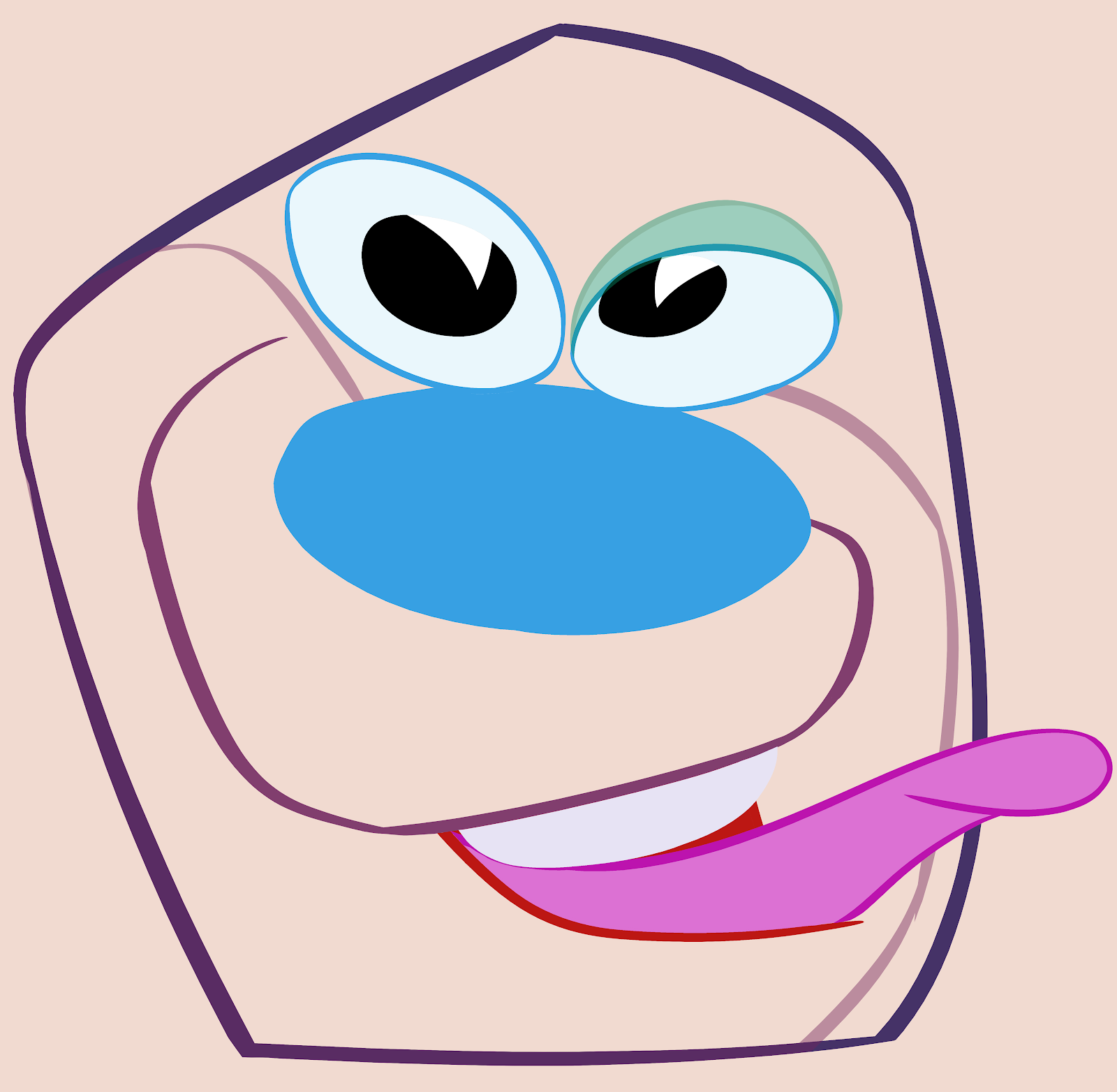
I had a couple guys say they were interested in making me some add-ons to make Flash more animator-friendly, but they have since vanished into the ether.
I want to develop some new tools to use on George Liquor and show off to other animators.
There's money in it.
Monday, May 26, 2008
I Need A Damn Flash Programmer
Saturday, May 24, 2008
Pizza Doodletime - The Phantom
Eddie and I got to talking about why Mike hated superheroes, and I said it was a great American tradition that should be ever preserved, but in its more innocent purer state.
Then we tried to figure out who invented the first superhero and we guessed it was Lee Falk, creator of the Phantom.
I remember reading The phantom in the funny papers in the 60s and knew it had been around forever. I don't think he actually had any superpowers, but he had the more important thing that defines superheroes: he went around in public in his underwear. I don't know how that was ever invented, or whether it evolved out of something else. I would like to think that it just occurred to Falk or somebody as an inspiration. Imagine thinking to yourself: "I've got it! I will create a crime fighter who goes around in his underwear beating people up! And no one will question it!"
Then I tried to remember what he looked like. He had a pretty bland costume I recalled. But Eddie, who's more conscious of silky man-fashions than me reminded me that he had purple striped briefs as an accent over his leotards.
Eddie and I spent some time debating which side of your hand the thumb went on.
The first Superheroes were pretty sedentary. The artists hadn't discovered action poses yet.
It took Jack Kirby to invent the idea of drawing fighters in action poses.
Eddie said he remembered the Phantom couldn't fly, so he rode a horse instead. And the poor criminals only had mere cars and bullets.
Then I took to doodling some more superhero types.
We wondered whatever happened to the Cheerios Kid? I imagine he grew up and still gets his go powers from dried stale starch rings.
What's great about superheroes is that they are as preposterous as talking funny animals but are meant to be taken seriously. As if there were dramatic stories starring the 3 Stooges. Even stranger is that I've met people who take comic book writers seriously and I've witnessed people arguing over whose stories make more dramatic sense.
I wonder if Falk was outraged when Siegel and Shuster came along and gave a man in underwear magical powers, destroying the believability of a crime fighting man in underpants on a horse. Can he have imagined that one day there would be hordes of undergarment crime fighting heroes and the whole world would totally accept the concept as normal?
It must be a great job though to get up every day and think up new adventures for underpants. I'd like to do that in my retirement and see if I can get a horde of fans too take me seriously.
Superheroes are a great American tradition and I kind of wish they would go back to being More mainstream in cheap throwaway comics on newsprint so every little kid could grow up normal, instead of just a few super nerdy kids (and adults!) who have to go out of their way to specialty comic stores for blurry photoshopped angry superheroes with pointy anatomy on expensive slick paper.
Bring back Mort Weisinger!
Friday, May 23, 2008
More BG Layout Notes - HIERARCHY of Form and Composition

BG Layout artists, or the persons who will help me design the main scenes and setups will have to be able to draw a variety of types of forms, and use some basic principles of design and composition to make the scenes compose well with the characters.
The BGs should provide an instantly readable organic environment for characters to play out their stories.
Hopefully some of these qualities below will help you see what I am aiming for:

Each of these trees has an interesting overall form. Even the foliage is contained in a form; it's not a mess of random leaves.

When you go outside, squint your eyes when looking at trees. Try to see the form of the tree, rather than getting lost and confused in the details of leaves, bark and branches.


Each kind of tree has its own unique plan, and each member of each kind of tree has its own unique variation on the same overall plan.

Man-made objects, such as houses and machines are made of simpler more geometric forms than nature's forms, but to be well-designed, they still have to have appealing, solid forms.And, they also have to have variety in the shapes, details, textures, arrangement of forms.
Lots of negative shapes!

Composition. The biggest forms in the picture have to make the overall statement instantly. A viewer shouldn't be distracted by a lot of cluttered details and an absence of negative shapes.

What details there are should be much smaller than the bigger forms they help describe. They wrap around the bigger shapes- going in the same directions. Not in a strictly 100% mathematical way. there should be very slight organic imperfections, but not so much that they destroy the forms they are part of.


The bricks, windows etc. on the walls below are not drawn with a ruler; there are no 100% parallel lines. Edges have slight curves. Not all the shapes mirror each other.
The details are not evenly spaced apart.

The background is composed to make the character read easily in his environment.
This is the kind of thoughtful control I would like in the layouts of my cartoons. No haphazard wonky flat modern look.
Stylish but planned.
A car is more organic than a house, but still has an overall form, and again: the details wrap around the form. They don't go off in their own directions.
The door follows the form of the side of the car, the lines on the seats follow the shape of the seats, etc.The details are less important.
The details follow the same perspective and physics as the larger forms.
Not all areas of detail are filled equally. There are sparse areas or completely empty areas.
THE DETAILS ARE MUCH SMALLER THAN THE LARGER FORMS
This is so important. If the details get too large, or stick out of the silhouettes of the larger forms, they make it harder to see an overall form.
This Frazetta drawing looks elaborate and detailed, but follows the same ideas and planning of the more cartoony art above. All the little details - the bark texture, the moss, the flowers and mushrooms are much smaller than the twisted solid tree root. The tree root is the important graphic statement.If the details were too large, or didn't flow around the root, or stuck out of the silhouette of the root more, you wouldn't feel or see the root so clearly.
There are sparser areas of detail on the root-between the areas of moss, for example.
I don't need anything this detailed in my cartoons, but the principles are what I am after.
The big picture should be solid, interesting and instantly readable as what it is - and not get in the way of the characters..

Wednesday, May 21, 2008
Jimmy Models over the years


If you wanna learn to draw Jimmy, do it the same way you studied George. Copy the first few poses exactly, proportions, construction etc. to get used to him. The drawings near the bottom are harder because the poses are more complicated, so don't start there.
This is my favorite face of Jimmy above. I've never been able to recapture his joyful look of discovery with a hint of evil.
Here's Jimmy after a diet of potato chips and sodas.

Now he starts getting complicated. Don't be distracted by all the wobbly details. They all flow along his central line of action and basic silhouette.